
If you want consistent organic traffic, one question matters most: how do you find the right keywords for your niche?
Choosing the correct keywords determines whether your content ranks — or gets lost online.
Keyword research is not about guessing popular words. It is a strategic process of identifying search terms your ideal audience is actively using. In this blog, we’ll explain how do you find the right keywords for your niche
Experience: Start With Real Audience Understanding
From hands-on SEO experience, the biggest mistake beginners make is targeting high-volume keywords without understanding search intent.
Before using tools, ask:
- Who is your target audience?
- What problems are they trying to solve?
- What language do they use?
- Are they beginners or advanced users?
For example, a beginner might search “how to start SEO,” while an expert may search “technical SEO audit checklist.”
Understanding audience psychology is the foundation of keyword discovery.

Expertise: Step-by-Step Keyword Research Process
To properly answer how do you find the right keywords for your niche, follow this structured approach.
1. Define Your Niche Clearly
Broad niches create high competition. Narrow niches create opportunity.
Instead of:
- “Fitness”
Try:
- “Home workouts for beginners”
- “Weight loss diet for vegetarians”
Specific niches allow you to rank faster.
2. Use Keyword Research Tools
Professional marketers use tools like:
- Google Keyword Planner
- Ahrefs
- SEMrush
These tools help you analyze:
- Search volume
- Keyword difficulty
- Competition level
- Related keyword ideas
Focus on keywords with:
- Moderate search volume
- Low to medium competition
This balance increases ranking chances.
3. Analyze Search Intent
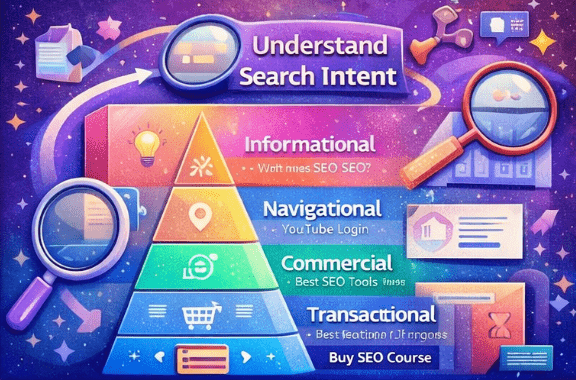
Search intent determines why someone is searching.
There are four main types:
- Informational – “What is SEO?”
- Navigational – “YouTube login”
- Commercial – “Best SEO tools”
- Transactional – “Buy SEO course”
Match your content type with search intent.
If someone searches for information, don’t push direct sales immediate
Find the right keywords for your niche on Google.
Analyze:
- Top-ranking pages
- Content length
- Headlines
- FAQs
- Content structure
If competitors are writing 2,000-word detailed guides, a 300-word blog won’t compete.
Look for gaps where you can provide more value.
5. Focus on Long-Tail Keywords
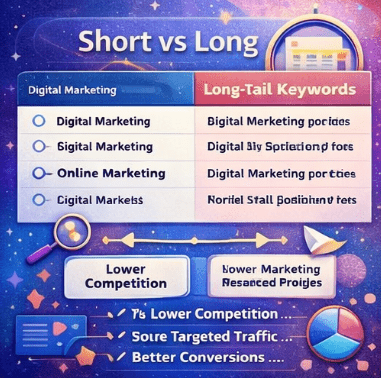
Long-tail keywords are longer, specific phrases.
Example:
- Short keyword: “Digital marketing”
- Long-tail keyword: “Digital marketing strategies for small businesses”
Long-tail keywords:
- Have lower competition
- Attract targeted traffic
- Convert better
For niche websites, long-tail keywords are powerful.
Authoritativeness: Building Topical Authority
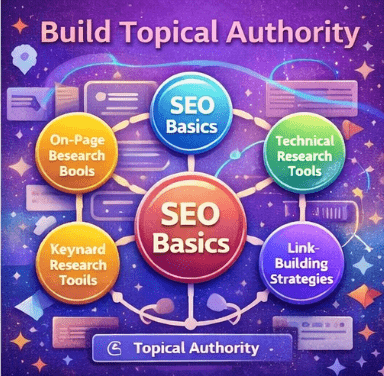
Finding one keyword is not enough. You must build topical clusters.
Example for SEO niche:
Main topic:
- SEO basics
Supporting topics:
- On-page SEO checklist
- Technical SEO tools
- Keyword research guide
- Link-building strategies
Internal linking between these blogs strengthens authority.
Search engines prefer websites that demonstrate expertise across related topics.
Trustworthiness: Validate Before Publishing
Before finalizing keywords:
Check Keyword Trends
Use Google Trends to see if interest is rising or declining.
Avoid Misleading Keywords
Don’t target irrelevant keywords just for traffic.
Ensure Content Quality
If your blog does not satisfy search intent, rankings will drop.
Consistency, relevance, and user value build trust with search engines.

Common Keyword Research Mistakes
- Targeting only high-volume keywords
- Ignoring search intent
- Not analyzing competitors
- Overusing keywords (keyword stuffing)
- Failing to update old content
Modern SEO rewards value, not repetition.
Practical Example
Suppose your niche is digital marketing for startups.
Instead of targeting:
- “Marketing”
You could target:
- “Affordable marketing strategies for startups”
- “How startups can generate leads online”
- “SEO tips for new businesses”
These are easier to rank and more targeted.
SEO Metrics to Consider
When choosing keywords, analyze:
- Search Volume
- Keyword Difficulty
- Cost Per Click (CPC)
- SERP Competition
- Content Quality of Top Results
Balanced analysis leads to smarter decisions.
Final Thoughts
So, how do you find the right keywords for your niche?
You combine:
- Audience understanding
- Data-driven tools
- Competitor research
- Search intent analysis
- Long-tail keyword strategy
Keyword research is not a one-time task. It is an ongoing process that evolves with trends, competition, and market behavior.
When done correctly, find the right keywords for your niche.
5 Image Concepts for This Blog
Here are five professional image ideas you can use:
- Keyword Research Dashboard Mockup – Showing search volume and difficulty metrics.
- Search Intent Pyramid Graphic – Informational to transactional stages.
- Long-Tail Keyword Illustration – Short vs long keyword comparison chart.
- Competitor Analysis Screen Concept – SERP results breakdown.
- Topical Authority Cluster Diagram – Main keyword connected to subtopics.